You're Not Charging Too Much
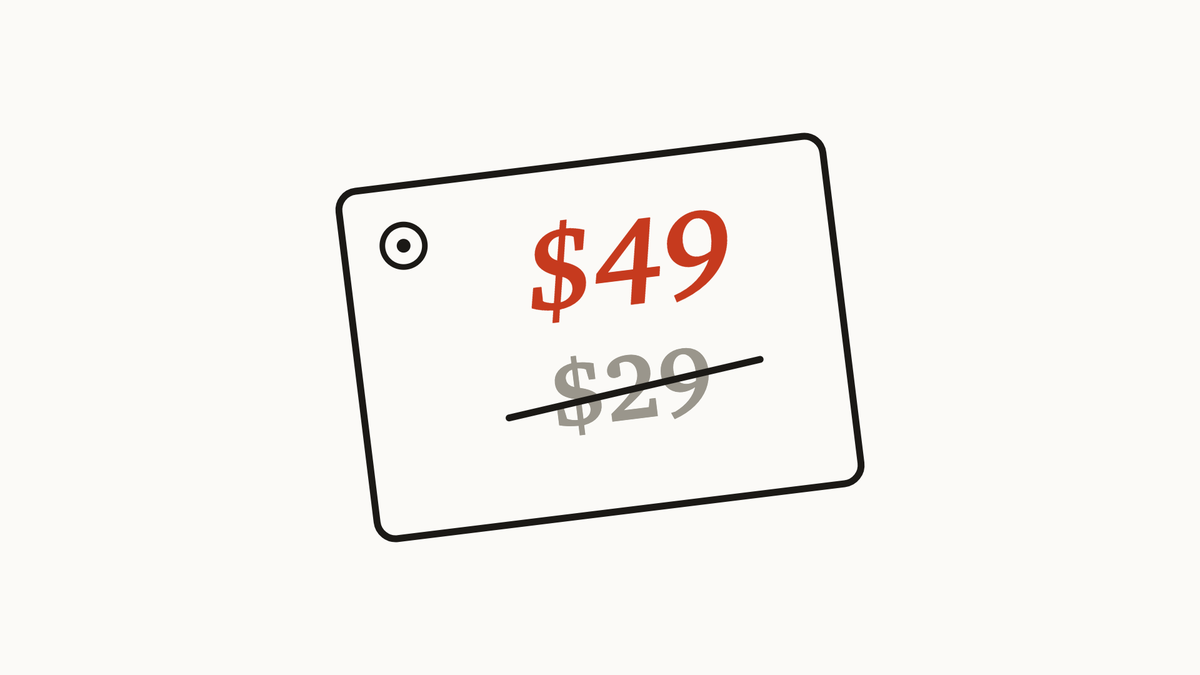
A founder I work with is about to launch. New product, new category, a few weeks out. We spent a lot of time on pricing - built a financial model together, discussed the assumptions, reached a number we both believed in. Then I read the draft launch materials, and the price on them is lower than the one in the model. Noticeably lower.
So I asked him why. He has an answer, and it makes sense. The market he's selling into is conservative. He's a newcomer going up against incumbents everyone in the category already trusts. A low price, he figures, takes one more objection off the table while people are deciding whether to take a chance on him at all. Get them in cheaply, let the product prove itself, raise it later. Growth now, margin later. I understand the logic. I think it's a mistake. And we haven't settled it - we're still going back and forth - which is part of why I wanted to write this.
I should be straight about something. He knows his market better than I do. He was one of its customers before he built the company - he sat in the chair he's now selling to. I haven't. So I don't have a sharper read on his buyers than he does. What I can offer is the one thing an outsider sometimes sees more clearly than the person in the middle of it: the long game. He's looking at launch day. I'm looking at the renewal twelve months out.
Underneath the pricing decision is a question that usually gets skipped, and it's the one I keep coming back to with him: what is the friction actually made of? Answer that honestly and the pricing question gets a lot smaller.
His case is worth laying out properly. He's not discounting out of fear or to win a single deal. He's making a strategic bet: in a market where nobody knows him, price is one of the few levers he fully controls, and pulling it lowers the cost of saying yes. Now, there are markets where that bet is right. If you're selling something close to a commodity, where buyers line up three options and compare them feature for feature, price does real work. If switching is cheap and procurement is built to chase the lowest number, the lowest number wins. So this isn't a question with an obvious answer. Reasonable people take his side of it.
What I notice when I'm the one buying
Here's where my own experience actually counts for something. My consultancy is a small business, and small businesses buy software. I'm exactly the kind of customer this founder is trying to reach. And when I think about how I actually decide, price is always part of it and almost never the thing that decides it. If the value is clear, I'll pay more. If it isn't, cheap doesn't help - cheap just lowers what I lose when I stop using it.
I don't think I'm unusual in that. Across the buying decisions I've watched - mine, and the ones I've observed as an advisor - price is almost never what determines the choice. What decides it is prior experience with the company and the sense that the product will actually do the job. People don't choose the cheapest tool. They choose the one they trust to work.
So here's the friction. His product is a modest monthly subscription, and for the customer who actually uses it, it pays back many times what it costs. Nobody in his market walks away because the price is too high. The price was never the obstacle. The obstacle is getting a careful, conservative buyer to try something new from a company they've never heard of, and then to move part of their workflow onto it. That's a real barrier. It just isn't a price barrier, and a lower number does nothing to lower it.
What the low price quietly funds
And the margin he gives up has a second cost, one that compounds. It's runway he doesn't get back. A conservative buyer's deepest fear isn't that the product is too expensive - it's that the company won't be there in two years, after they've committed part of their work onto it. That fear is rational. Most of the vendors who ask them to take a chance do eventually disappear, and a thin runway is exactly what turns the fear into a fact. So pricing low to reassure a nervous buyer can quietly cause the very thing they were afraid of. He gives up the cash that would have kept him alive long enough to earn their trust, and he gives it up to remove an objection they were never really raising.
There's a piece of his instinct that's exactly right, though. For a buyer who has to be educated into the value, belief comes from experiencing it, not from being told about it. They have to use the thing and watch it work. He's right that the job is to get them in. He's just reaching for the wrong tool. Getting them in is the work of a trial, a pilot, a good onboarding - not a low price. Those lower the real barrier, the one made of doubt and inertia, without touching the number. The mistake is treating "lower the barrier to experiencing the value" and "lower the price" as the same move. They're not. One solves his actual problem. The other solves a problem he doesn't have, and creates new ones in its place.
The number becomes permanent
A launch price doesn't feel temporary to the people who pay it. It becomes the reference point every later conversation gets measured against. The "raise it later" he's counting on isn't a correction in the customer's eyes - it's a price increase, and early customers are the ones most likely to leave over that. The friction he's trying to avoid at launch doesn't disappear. It moves to renewal, and it's bigger when it gets there.
This is where the outside view is useful. He's solving for the first ninety days. I'm worried about the number he'll be stuck with for years, because the first number you put in front of a market is the one it remembers.
So what would I do instead
Not "never price low." Sometimes that's exactly right. But the place to start is the question from the top: what is the friction actually made of? In his case it's an unproven product and an unknown company. Neither of those is priced away.
So I'd reach for the tools that lower that specific friction. A free or discounted trial, where the product gets a chance to prove itself. A pilot or a founding-customer arrangement that trades access and a bit of price for commitment and honest feedback - aimed at the customers he chooses, not the whole market. If he wants an on-ramp, a launch price that's explicitly time-boxed, with the standard price named up front, so the discount reads as a real introductory offer and not as the new normal. Tiers, so there's a smaller way in without telling the market the whole thing is cheap. All of these lower the cost of saying yes without spending the one number he can't easily take back.
Let me be honest about this. He might be right - he might know something about this market, from having lived in it, that I can't see from outside. The decision is his, and we're still working through it. My job isn't to make it for him - it's to make sure he's making it on purpose, and not because the launch was coming and a lower number felt like the safe way to get people through the door.
Because the friction he's pricing for isn't the price. It's trust, and the patience to let the product earn it. A lower number doesn't buy either one. The trial does. The pilot does. The extended runway that a fair price enables does. That's the part worth thinking about before the number on the launch materials quietly becomes the number forever.
I help founders navigate strategy and funding decisions when the path isn't clear. If you're there, let's talk.
If this was useful, I write one of these most weeks.
Subscribe on LinkedIn