When the Next Round Isn't Coming
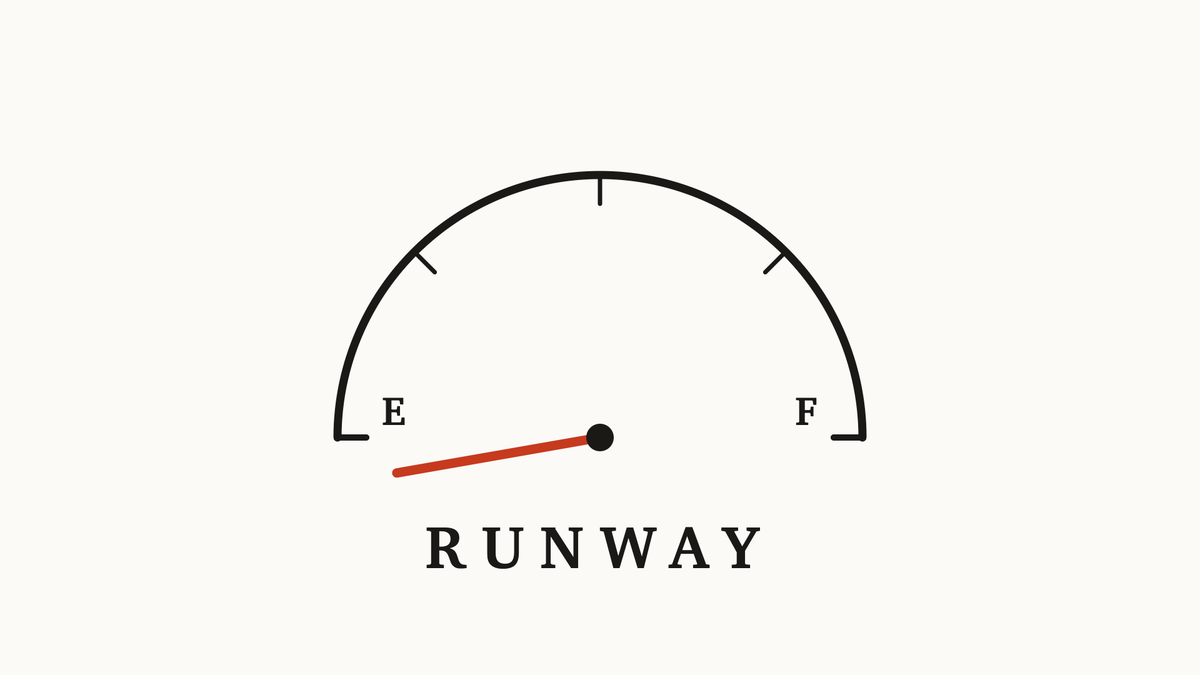
A pet-tech company in our portfolio raised their seed round in 2022. We led the round, and I joined the board. Solid product, growing customer base, experienced team. They made decisions that made perfect sense at the time.
The funding environment suggested their next round wouldn't be hard to raise given their progress. So they moved fast - invested aggressively in growth. They hired in-house wherever possible, building internal capability rather than outsourcing. Keep the knowledge in the company, save costs long-term. Smart thinking for a world where Series A was 18 months away and investors were eager.
By mid-2024, that world had disappeared. The next round wasn't just delayed - it wasn't coming. Not at terms that made sense. They were stuck in the middle: cash running out, not enough traction to attract Series A investors, and - because they'd built a UK-based team - strict employment laws that limited flexibility. They couldn't cut costs quickly even when they recognized the problem.
I've had too many of these conversations over the past few months. Founders who should have closed their next round by now - according to their plans, their board decks, their carefully modeled scenarios. But the process is taking longer than anyone anticipated. Runway is shrinking.
Their questions: (1) Is there a way to accelerate the fundraising? (2) Should we cut costs? (3) Do we go back to our investors for bridge funding?
The answers, usually: (1) No. (2) Sure - but how effective it will be depends on how early you act. And (3) almost always yes - though that conversation is more complicated than it sounds.
The funding environment fundamentally restructured over the past two years, and a lot of founders haven't fully registered what it means for them.
What Actually Changed
The numbers tell part of the story. Seed-to-Series A conversion rates dropped from roughly 30% in 2018 to about 15% today. The time between rounds stretched from 18 months to over 25. The revenue expectations for Series A moved from $1M ARR to $2.5-3M minimum, plus efficiency metrics that nobody was asking about in 2021.
But statistics don't capture what this actually feels like from inside a company. A whole generation of startups raised seed funding with plans built for a world that no longer exists. They're not failing - they're stuck. Real traction, paying customers, genuine progress - but not enough to raise a Series A at a valuation that makes sense.
Here's the math problem most seed-stage companies now face: standard seed runway is 18-24 months, but actual median time to Series A is now over 25 months. If you raised a seed round sized for 18 months and you're targeting a Series A that takes 25+, you don't have a performance problem. You have an arithmetic problem.
The bridge round data tells the same story. About 40% of early-stage rounds are now bridges or extensions - the highest this decade. Bridge rounds used to be a red flag. Now they're just... rounds.
These shifts are clear in retrospect. From inside a company, they're often invisible until it's too late.
The Recognition Problem
Here's what I've noticed: many founders don't realize they're in trouble until runway gets critical. The early signals are easy to misread. Series A conversations that seem promising but don't advance. Metrics that feel "close" but aren't generating term sheets. Investors who take meetings but don't make decisions.
The difference between founders who navigate this and those who don't often comes down to timing. Early recognition creates options. Late recognition creates emergencies.
I've watched this pattern enough times to notice something: founders tend to believe their situation is different. The metrics are about to inflect. The pipeline is about to close. The market is about to turn. Sometimes they're right. But the founders who get through this tend to be the ones who planned for the less-optimistic scenario.
So how do you know if you're heading toward this situation?
Five Questions Worth Answering Honestly
Before anything else, work through these.
What's your actual runway? Not optimistic runway - conservative runway, assuming no new revenue growth. The number that assumes things don't magically get better.
What's your current burn multiple? Net burn divided by net new ARR. Above 2x is concerning in this environment. Above 3x is a problem investors will spot immediately.
At current trajectory, when do you hit Series A metrics? Use today's bar - $2.5M+ ARR with efficiency metrics - not 2021's bar. Be honest about the timeline.
Do those two numbers work together? If you need 24 months to hit metrics and have 12 months of runway, you have a gap. That gap is the thing to focus on.
What would it take to reach "default alive"? Can you get to breakeven - or close enough - on current cash?
That last question deserves attention. Paul Graham posed the critical distinction: assuming expenses remain constant and revenue growth continues on trend, will you reach profitability before running out of money?
"Default alive" means you control your destiny. You can choose to raise - or not. You can wait for better terms. "Default dead" means you need external capital to survive. Your negotiating position weakens as runway shrinks.
For seed-stage companies, "default alive" often means keeping burn so low the company can survive indefinitely on existing revenue. Not real profitability - survival profitability. In practice, this usually means monthly burn under $30-40K - sometimes much less - with enough recurring revenue to cover it indefinitely. The tradeoff is real: slower growth in exchange for control. But when the next round isn't guaranteed, control is worth something.
What Actually Works
If there's a gap between your runway and your path to Series A, you're "stuck in the middle". The question is what to do about it.
Have the board conversation early. If you're in the middle, your board needs to know. Current reality, gap analysis, scenarios, what you need from them. Boards can't help if they don't know the situation. And investors generally respect founders who recognize problems early. What they don't respect is surprises.
Evaluate bridge rounds carefully. They make sense when you have clear milestones between current state and Series A, existing investors willing to participate, and terms that don't ruin your cap table. They don't when there's no clear path to the next milestone, or when terms include provisions that scare off future investors. A clean down round is often better than a bridge with toxic terms.
Consider the profitability path seriously. For some companies, the right answer isn't "figure out how to raise" - it's "figure out how to not need to raise." This isn't admitting defeat. It's recognizing that building a sustainable business might be the strongest position when Series A isn't guaranteed.
Another founder in our portfolio understood this earlier than most. In early 2023, when runway was still comfortable but the funding environment was clearly shifting, he cut costs dramatically - let go 40% of the team. It seemed rash to me at the time. Honestly, he saw things I didn't. The company got to default alive, pivoted from B2C to B2B, and is doing well today. The founders who get through these periods aren't always the ones with the best metrics. Sometimes they're the ones who read the environment fastest.
When Investor Dynamics Get Complicated
Here's something that doesn't get discussed enough: "stuck in the middle" situations have a way of straining investor relationships. Having sat on both sides of these conversations - as the investor being asked for bridge funding and as the board member watching the dynamics unfold - I've seen how these situations strain relationships in ways founders don't anticipate.
With that pet-tech company, when bridge funding became necessary, not all investors wanted to participate. Some had shifted priorities. Some had new management. Some had simply lost confidence. This created difficult board dynamics - investors who wouldn't put in more money but still had opinions about strategy. Worse, it gave participating investors leverage to demand terms they'd never get in a competitive process.
Different types of investors respond to these situations very differently. VCs are playing a portfolio game - one struggling company is a write-off they'd rather not spend time on. Individual angels may have limited capacity for follow-on. Strategic investors may have shifted corporate priorities that have nothing to do with your performance. Each has different incentives and different appetites for supporting a company in need.
If you're already in this situation with difficult investors, a few things help. Document everything. Keep communications professional and in writing. Focus your energy on the investors who are willing to support you - they exist, and they're the relationships worth nurturing. And when you have options - even limited ones - use them to bring in someone who'll commit through hard periods.
If you're raising a seed round now, think carefully about who you're bringing onto your cap table. I won't pretend this is easy - early-stage founders often don't have the luxury of choosing between multiple eager investors. But accepting the wrong investor can be costly. Talk to other founders in their portfolio, especially ones whose companies struggled. How did this investor behave when things got difficult? You can't predict everything, but you can choose investors who've demonstrated commitment through hard periods.
One more thing worth noting - especially for founders raising seed rounds right now who can't imagine ever facing this situation. You might. Negotiate your anti-dilution provisions like they'll actually matter. Down rounds happen to good companies in bad environments. The difference between full ratchet and broad-based weighted average is negotiated years before it matters, usually by founders who couldn't imagine needing it.
The Decision Timeline
A rough framework for when decisions need to happen:
At 12+ months runway: You have real options. This is when to decide between pursuing a bridge round and pivoting toward profitability. You can't wait longer and preserve optionality.
At 9 months: If you're pursuing a bridge, conversations must be active. Fundraising always takes longer than you think.
At 6 months: You're in emergency mode. Everything's on the table.
At 3 months: You waited too long.
The founders who navigate this successfully make decisions at 12+ months, not 6. The ones who wait are usually hoping something will change. Sometimes it does. Usually it doesn't.
What This Means
There's no magic bullet here. The path forward is usually some combination: face reality early, go to your board with transparency and a plan, cut costs where you can, pursue bridge funding from existing investors, and consider pivots that sacrifice fast growth for a nearer breakeven point.
This isn't just your problem - it's the times we live in. The environment shifted. Plans built for 2021 don't work in 2025. That's not a reflection on founder capability. But it does require adaptation.
That pet-tech company I mentioned at the start? The board dynamics became increasingly difficult. The bridge conversations dragged on. Not everyone participated, and those who did wanted terms that reflected their leverage. Eventually, the company ran out of options. It didn't end well.
The founders I've seen navigate this successfully weren't necessarily smarter about the situation. They recognized it earlier and adapted faster. They went to their boards before things got critical. They had uncomfortable conversations while they still had options.
None of this is easy. But it's navigable - if you start early enough.
I help founders navigate strategy and funding decisions when the path isn't clear. If you're there, let's talk.
If this was useful, I write one of these most weeks.
Subscribe on LinkedIn