What Investors See in Second-Time Founders
And How First-Timers Can Close the Gap
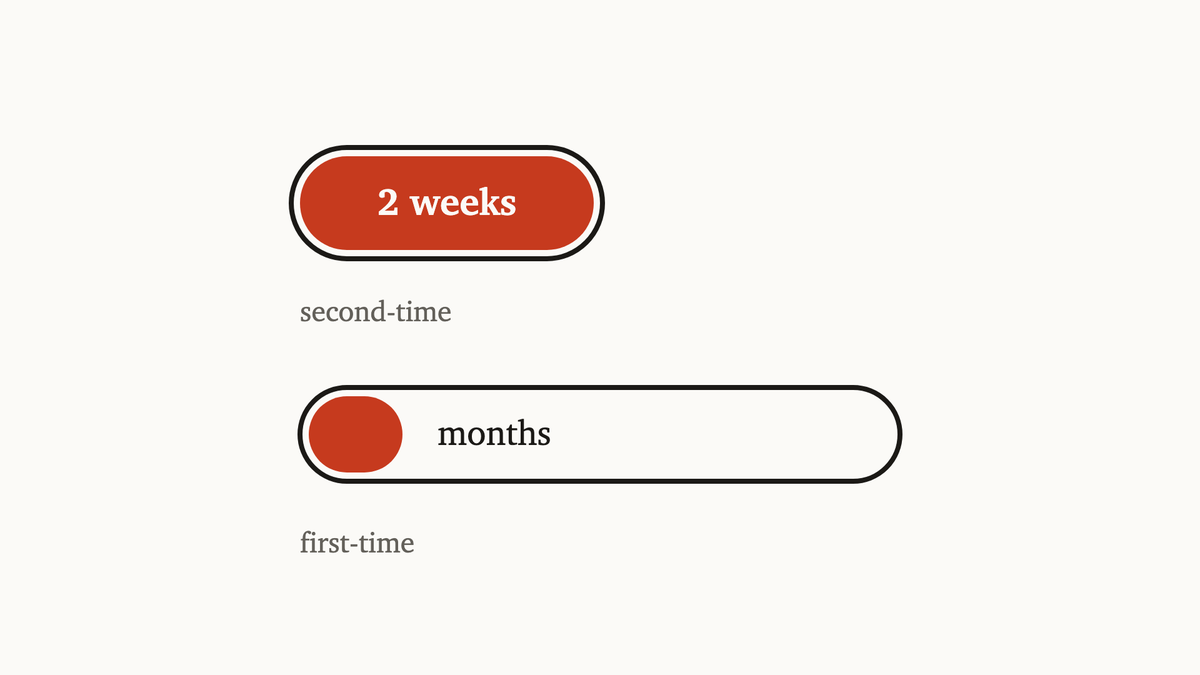
A founder I'm working with called me a few weeks ago, frustrated. He's deep in a seed round raise - several months in, plenty of "no," a few "maybe," the grinding process most founders know so well. That wasn't the frustrating part. It was something he'd just found out about an acquaintance of his - also raising, also early-stage, but a second-time founder. Pre-seed closed in two weeks. Multiple investors competing for allocation.
"Is it just because he's done this before?" my founder asked. "His first company wasn't even a big success. What do they think - that he's failure-proof now?"
It's a fair question. And the honest answer is: no, that's not what they think at all.
Nothing about having built a company before guarantees better decisions the second time. Markets shift. Every venture is genuinely different. Second-time founders fail too - sometimes more spectacularly than first-timers, because they take bigger swings with more confidence. A track record is not a prediction.
So what exactly are investors buying?
I think the answer is simpler - and more learnable - than most people assume. What investors are reading for isn't proof of success. It's evidence that this person has already faced the territory. Not in theory, but specifically - the fundraising timeline, the loneliness, the dilemmas, the investor dynamics. When second-timers sit across from an investor, they're not bringing assumptions about how the process works. They're carrying experience of how it actually works. That's a difference you can feel in a conversation pretty quickly.
The encouraging part is that none of these things actually require a previous company. They do require deliberate preparation. Here's what that looks like.
They know what they actually signed up for
There's a version of the founder journey that gets a lot of coversge - the outlier story, the “idea-to-exit” that somehow wraps up in three years. Most first-time founders have absorbed more of that version than they realize. Second-timers have lived the other version: the ten-plus years that's far more common, the stretches where nothing is working and there's no obvious reason things will change, the personal cost of building something that takes that long.
That's not pessimism - it's just a more accurate picture. And investors can tell, fairly quickly, whether the person sitting across from them actually understands what the journey involves.
If you're a first-timer, this is learnable. Find founders who are five, eight, ten years in - not the ones who exited cleanly, but the ones still building. Ask them what they didn't expect. Ask what kept them going through the stretches where nothing worked. The goal isn't to talk yourself out of starting. It's to have a more honest picture of what you're getting into before you've committed everything. Investors can tell the difference between a founder who has done that work and one who's still running on enthusiasm. The former is a much easier bet.
They've thought through the hard decisions before they arrive
Every early-stage company hits the same set of dilemmas. Speed versus resilience. Product versus distribution. Who to hire and when, and what to do when you got it wrong. These tensions show up constantly in the companies I work with. Second-timers don't arrive at these forks surprised. They knew they were coming and have thought, at least once before, about how they want to approach them. That doesn't mean they have the right answers - but it's a different conversation when you've already sat with a question than when you're encountering it for the first time.
You can get ahead of this without having lived it. Write down the tensions you're going to face, your current thinking on each one, and where you're genuinely uncertain. I'm not suggesting you have it all figured out - that would be unconvincing anyway. But a founder who can talk through the hard choices they expect to face, and has clearly spent time on them before the moment arrives, reads very differently than one hearing about them for the first time in a partner meeting.
They know that deciding matters as much as deciding right
This one is underappreciated. Experienced founders tend to be both more thoughtful and faster - not because they're smarter, but because they've learned that indecision has a real cost. Sometimes a bigger cost than an imperfect decision made quickly. The hard choices deserve serious thought. But sitting in them past the point where the thinking is productive is its own kind of failure.
When I was on the investor side, this was one of the things I watched for most carefully. Not whether a founder had all the right answers, but whether they could move. Could they take in the information, weigh it seriously, and actually make the call? Or were they going to stay stuck at every fork until somebody else decided for them? That shows up fast in a conversation, and investors pay attention to it.
For first-timers, this means thinking in advance about how you'll know when a decision has been open long enough. Not having all the answers - but having a sense of when "we need more data" turns into "we're just avoiding the decision." When is a hire clearly not working? How long do you give a sales channel before you try something else? Those questions feel premature when everything is theoretical. They're not.
They've built for the loneliness before it hits
This doesn't get discussed enough. The moments when you can't fully level with your team, can't bring everything to your co-founder, can't afford to look uncertain with investors - those moments come in every company. Second-timers tend to have their people in place before things get hard: other founders they actually talk to, a personal network that isn't also their professional one. First-timers often discover the loneliness when they're already inside it with nowhere to turn.
Build the network before you need it. Find two or three people who have been through a raise, or through a hard year in a company, and whose judgment you trust enough to be honest with. This isn't about having people to vent to - it's about having people who can help you think straight when you're too deep in your own situation to see it clearly.
They've sorted out the co-founder question deliberately
Either they're building with someone they've already worked alongside through pressure - argued with, made hard calls with, seen at their worst - or they've made a conscious decision to go solo, understanding what that actually requires. What they're not doing is hoping it works itself out.
I've been on several sides of this one. I've co-founded a company and felt what that does to a relationship when things get hard. I've worked with solo founders who built remarkable companies by surrounding themselves with the right advisors. And I've watched promising companies come apart because the co-founder conversation never happened until it was too late. Co-founder dynamics blow up companies that had everything else going for them. An investor sitting across from someone who has thought this through - in either direction - takes it as a sign of how they think about risk in general.
If you're building with someone, have the conversations you've been putting off - about roles, about what happens when you disagree, about equity and expectations. If you're going solo, be honest about what that means day to day and make sure you have the advisory depth to compensate for it. Either way, investors will ask. Your answer should show that you've actually thought it through.
They know what not to expect from investors
This might be the most important one, and it's where having sat on the other side of the table changed my thinking most. Second-timers understand that their seed investors are not a safety net. When things get hard - and they will - investors have their own portfolio to manage, their own constraints, their own decisions about where the next dollar should go. First-timers often assume, without quite realizing it, that the investors who chose to back them will be there when things get difficult. Second-timers build their plans around how the relationship actually works.
Before you take a meeting, do the homework. Talk to founders in that investor's portfolio - not the ones they refer you to, but ones you find yourself. Ask what happened when things didn't go to plan. Ask whether the investor showed up or disappeared. Understand what you're actually getting into, so you can build the relationship on realistic expectations rather than finding out the hard way in a moment of crisis.
I'm not going to pretend this fully closes the gap. A lot of that quick closing of the round comes from relationships and reputation that take years to build. But it narrows the distance. And in a fundraising environment that's genuinely difficult right now, narrowing the distance matters.
My founder is still in his raise. It's still slow, still more "no" than anything else. But that conversation got him working on some preparation he hadn't done before - not the pitch itself, but the harder questions underneath it. His conversations with investors have been different since. Not a term sheet yet. But a different quality of conversation.
That's probably the right frame for what's available here. Not a shortcut - a better conversation, built on preparation that most first-timers don't do because nobody told them they should.
I help founders navigate strategy and funding decisions when the path isn't clear. If you're there, let's talk.
If this was useful, I write one of these most weeks.
Subscribe on LinkedIn