Why I Stopped Telling Solo Founders to Find Partners
I'm working with two solo founders right now. Elizabeth is in California, building an AI platform for women approaching menopause - information, products, community. Michael is in Europe, a veterinarian building the next generation of practice management software. Both are using AI extensively in what they're building.
Both are exceptional. Elizabeth understands her market because she's immersed in it (and she's an expert marketer). Michael has spent years in clinics watching how decisions actually get made. They're building things that matter, and they're building them alone.
And in the back of my mind, I've been worried about them.
For years, I've pushed solo founders to find co-founders. The statistical evidence seemed overwhelming - two or three founder startups have dramatically better outcomes than solo ventures. YC preferred teams. VCs preferred teams. The research said teams win. When a solo founder came to me, my advice was consistent: go find a partner before you go too far.
But I've been writing lately about how the old playbook is dead. How AI changed the economics of building. How truths that held for a decade no longer apply. So I decided to check myself. What does the current data actually say about solo founders?
What I found surprised me. And made me reconsider advice I've been giving for years.
What I Thought I Knew
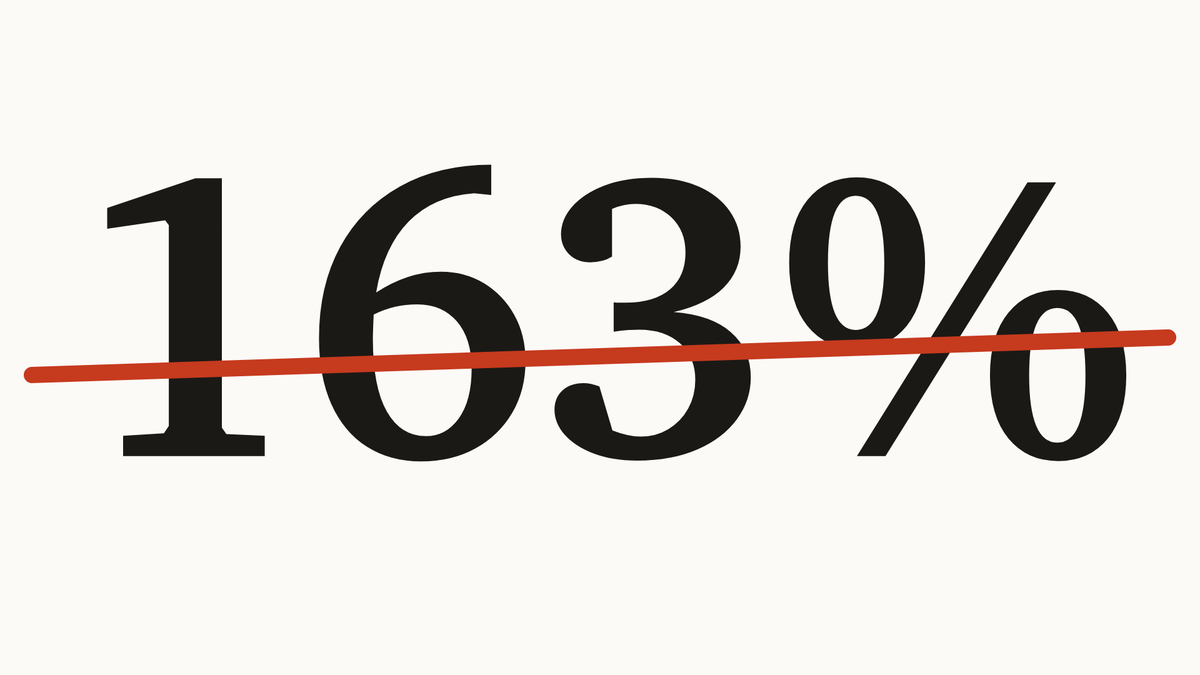
The case for co-founders seemed settled. A famous study found that co-founder teams outperformed solo founders by 163%. Paul Graham wrote about how "the low points in a startup are so low that few could bear them alone."
The logic made sense. Two founders meant complementary skills - one technical, one business. It meant someone to share the emotional burden. It meant better decisions through debate.
I internalized this completely. When Michael first told me he was building alone, my instinct was to ask about co-founder candidates. When Elizabeth described her vision, part of me was calculating how long before she'd need a partner.
I wasn't wrong to ask those questions. But I was wrong about why.
What Actually Changed
Here's what I didn't know: the evidence for co-founder superiority comes almost entirely from VC-backed companies. VCs have a strong preference for teams - they fund them more readily, give them higher valuations, provide more support. So when you measure success by VC-backed outcomes, teams look better. But that's selection bias, not proof.
When researchers looked at companies outside the VC filter - Kickstarter-funded ventures where investor preference doesn't skew the data - solo founders actually outperformed co-founder teams on survival and revenue. Not by a little. Significantly.
But here's what really shifted my thinking. A researcher at Harvard spent a decade studying thousands of founders. His finding: 65% of high-potential startups fail due to co-founder conflict. Not market fit. Not competition. Not running out of money. Co-founder conflict.
I should have known. Everywhere I've been - from multinational corporations to strategic investments - the most dominant success factor has been people. Partnerships that work, and partnerships that don't. Why would startups be different?
This is the graveyard nobody talks about. We celebrate the partnerships that work - Airbnb, Stripe, the stories in case studies. We don't count the thousands of companies destroyed by the very relationships that were supposed to make them stronger.
What Made Solo Possible
The traditional argument for co-founders rested on complementary skills. You need a technical co-founder and a business co-founder. One person can't cover both.
That was true in 2015. It's less true now.
Neither Elizabeth nor Michael are software developers. But both have built real products. They did it by finding new ways to access technical talent - outsourcing, working with senior developers on contract, treating product execution as a function to manage rather than a skill to possess.
AI tools changed the talent equation. Both work with top-tier developers who would never have joined a pre-seed startup full-time, but who can contribute meaningfully to multiple projects. The choice is no longer "find a technical co-founder or don't build."
YC noticed this shift. A partner wrote recently: "There was a time when YC almost never accepted solo founders. That time might be over."
This doesn't mean co-founders are obsolete. Some businesses genuinely require parallel expertise from day one - deep tech, biotech, hardware, heavily regulated industries. If that's you, this article isn't about you. But for software platforms like what Elizabeth and Michael are building, the skill gap argument has weakened. The emotional support argument remains - but so does the conflict risk.
The Real Trade-Off
So what's actually being weighed here?
Not "solo vs. team." That framing misses the point. The real trade-off is isolation versus conflict. Both have costs.
Solo founders face loneliness. The emotional toll of carrying every decision alone. No one to reality-check with at 2am when everything feels impossible. Paul Graham was right about the low points - they're brutal, and going through them alone is genuinely hard.
Co-founders face something different. The interpersonal stress. The alignment anxiety. The slow-building resentment when one person feels they're carrying more weight. The research shows this isn't paranoia - it's probability. Most co-founder relationships don't survive the journey.
Elizabeth is actually exploring this trade-off right now. She's looking for a CTO co-founder - not because she can't build without one (she's already proved she can), but because she's weighing whether the right partner would accelerate what she's building enough to justify the risk.
That's the right question. Not "do I need a co-founder?" but "would this specific person be worth it?"
What I'm Actually Watching For
So when I work with solo founders now, what am I looking for?
Not whether they have co-founders. Whether they have support systems.
The founders who succeed alone aren't actually alone. They've built infrastructure deliberately:
A peer. One founder you can call when things feel impossible. Not a group chat - one person who gets it. Elizabeth joined a community specifically for solo founders. She describes it as "having five co-founders to reach out to in shaky moments" - the emotional support without the conflict risk.
A pattern-matcher. Someone who's seen similar situations play out and can ask questions you haven't thought to ask. The most useful conversations I have with founders aren't about telling them what to do - they're about being someone genuinely invested in their outcome, who can stress-test their thinking without the governance complexity of a co-founder relationship. That role matters more for solo founders than I used to realize.
A pushback partner. Could be a senior hire, advisor, or contractor. Someone with skin in the game who will tell you when you're wrong. Michael treats his CTO this way - not just someone who executes his ideas, but someone who improves them.
The question I ask now isn't "when are you going to find a co-founder?" It's "what's your support infrastructure?" Because isolation is solvable. You just have to solve it deliberately.
Red Flags Worth Watching
How do you know if isolation is becoming a problem? It's tricky, because the signs are easier to see from outside than inside.
You're rationalizing decisions you haven't stress-tested. Not just making decisions alone - that's fine. But when you catch yourself building justifications for choices that feel shaky, and you haven't run them past anyone who might push back, that's a signal.
Your "support system" only agrees with you. Friends and family want you to succeed. They're not going to tell you your pricing model doesn't make sense or your product roadmap is unfocused. If everyone around you is encouraging, but no one is challenging, you're not getting support - you're only getting comfort.
You haven't had a genuine "am I crazy?" conversation in months. Every founder has moments of doubt - about the market, the product, the whole endeavor. Those moments need somewhere to go. If you're burying them because there's no one to talk to, they don't disappear. They accumulate. I've watched founders carry months of suppressed uncertainty until it explodes into a crisis of confidence at the worst possible moment.
The low points are getting lower. Startups have cycles. Bad weeks happen. But if each dip feels deeper than the last, and recovery takes longer, isolation is probably compounding the problem. Resilience isn't infinite. It needs to be replenished - and that usually requires other people.
You're avoiding decisions rather than making them. This one's subtle. Solo founders are supposed to be decisive - there's no one else to decide. But when isolation sets in, some founders start deferring choices, waiting for clarity that never comes. If your to-do list is full of "think about X" items that never resolve, you might be stuck in your own head.
You've stopped learning from outside your bubble. When's the last time you talked to another founder facing similar challenges? Read something that changed how you think about your business? Got feedback that genuinely surprised you? Isolation doesn't just affect emotional health - it cuts off the inputs that help you adapt.
The tricky part: founders experiencing these symptoms often don't recognize them. It's gradual. You adjust to operating alone. The isolation becomes normal. That's why external check-ins matter - not just for support, but for visibility into your own state.
These are solvable problems. But only if you notice them.
Building Deliberately
Elizabeth might find her CTO co-founder. If she does, it will be because she found someone worth the trade-off - not because she couldn't succeed without one. She's already building. A partner would be acceleration, not rescue.
Michael will probably stay solo on the technical side, at least for now. He's built a system that works - his vision, his team, his control. That's not a gap in his company. It's a feature.
Both are asking the right questions. Both have support systems. Both are building deliberately.
That's what I'm watching for now. Not the co-founder question. The intentionality question.
And honestly? I like their odds.
I help founders navigate strategy and funding decisions when the path isn't clear. If you're there, let's talk.
If this was useful, I write one of these most weeks.
Subscribe on LinkedIn