The First Customer Problem
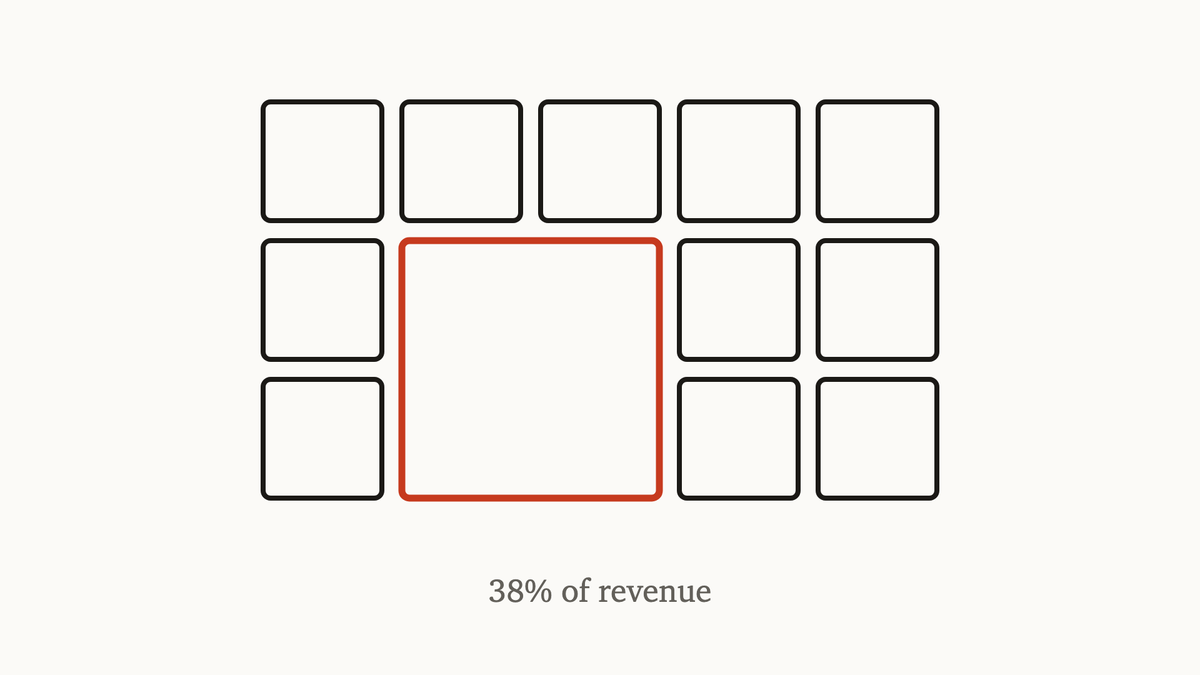
A founder called me a few weeks ago. One of her customers had quietly become a full-time job. Her company - a health and wellness device business that had spent the last two years pivoting, painfully, from consumer to enterprise - was doing well. The pivot had worked: insurance customers were closing, and the product finally had a real B2B story. But this customer wanted her on calls. They wanted a direct channel to the dev team on Slack. They wanted features built when they asked for them. She had assigned them a dedicated account manager months ago, and they were still routing around him to her. She wasn't angry. She was exhausted.
And the harder part was that the customer wasn't doing anything wrong. They were behaving exactly the way she had taught them to behave - calling her directly, telling the dev team what they needed, expecting the product to evolve their way. Back then, that was the job. Their feedback was how the product got refined. Their feature requests were how she found product-market fit. The access and availability was how she gained their trust. Three years later, they hadn't changed. The company had.
The retraining that didn't happen
This was the customer who gave them a chance when almost nobody else would. The pivot from consumer to enterprise hadn't been easy. It came after a long stretch of B2C numbers that wouldn't converge, a hard board-level conversation about whether to keep going at all, and a slow rebuild around a different strategy. In that rebuild, two or three early insurance customers took meetings that most others wouldn't. They piloted, they paid, and they referred others to her. The credibility she earned with that small group bought her the next twenty conversations - and most of the customers they later closed.
So when she described what was happening, she spoke kindly about them. They weren't being unreasonable. They were being early-stage. They expected the access she had offered them when the company had three customers, and the responsiveness on features she had promised them when every request was a step in the search for product-market fit. That was the deal. And founder-led sales doesn't end when the contract gets signed. It ends when the founder retrains the customer to expect something different. That retraining had never happened.
The cost that doesn't show up
There's an emotional dimension to this, and there's a rational one. Founders don't keep these relationships going because they're sentimental. They keep them going because the math, in the short term, says to.
Top-line growth has to keep going up, churn has to stay low, and retention metrics have to hold. The next round depends on the trend line being clean. Every dashboard rewards keeping the customer. None of them measures what the customer is costing in management attention. So even when a CEO knows, somewhere quiet in her head, that the relationship has gone net negative, the numbers are pulling the other way. Letting one customer go - especially the early one - shows up immediately in the metrics that matter to investors. The cost of keeping them shows up nowhere.
The gratitude is real. The math is also real. What neither of them includes is the cost. Sometimes the right answer is to keep paying it. But you should at least know what you're paying.
Why the obvious fix doesn't work
She had tried the obvious fix - assigning the customer a dedicated account manager, exactly the kind of hire that should have changed the relationship. It didn't. They phoned her. They Slacked the CTO. When the dev team pushed back on a custom request, the request would resurface a week later, escalated.
This is the moment many founders miss. The drag isn't about bandwidth. You can hire ten more CSMs and the customer who was trained to call the CEO will still call the CEO. The same logic runs through the product roadmap. At eight customers, every feature request was signal. You built what they asked for because what they asked for was the product. At a hundred customers, the picture changes. You can't run a coherent product tree when one customer thinks they have a vote on every branch. The work shifts from collecting requests to deciding which requests belong to a single coherent direction. That shift never gets explained to the customer who was there at the beginning, because the founder is too busy making the shift to also negotiate it.
Treating customers as a portfolio
Years ago, before any of this, I was advising a public IT services company - thousands of employees, hundreds of customers, dozens of products. The CEO had asked for help on a focus problem: too many customers getting too much custom work, too much management attention spread thin, no clear way to decide where to invest next.
What we did was simple. We plotted every customer on two axes - revenue contribution and management attention required - and forced the leadership team to look at the resulting picture together. What it surfaced was something they'd been resisting: not every customer deserved the same access, the same custom work, or the same CEO time.
So we did the same exercise with my founder's customer base. Once everyone was plotted on those two axes - revenue contribution and management attention required - the picture reframed the conversation immediately. It wasn't that she had a "problem customer." She had one outlier, a couple of customers quietly drifting toward the same quadrant, and a long tail paying for what they got and asking for very little in return. When you're inside one relationship, it feels like you have one founder-distracting customer. When you map the portfolio, you find three or four - customers who don't generate enough revenue to justify the attention they pull, but whose individual demands never feel bad enough on their own to act on.
Once you see the picture, the question changes. It's no longer "what do I do about this one customer." It's "what's my policy across the portfolio, and which customers does that policy require a different conversation with."
An uncomfortable conversation
The conversation we ended up having was about expectations, not about the contract or the price. She wasn't going to fire the customer, and she wasn't going to apologize for being harder to reach. The CEO of a company with a hundred customers can't be on Slack with one of them, and the dev team can't build features on request. The account manager is the person they talk to now, and he's good - which they would discover if they ever talked to him.
The retraining was harder than she expected. The customer pushed back. They escalated. They reminded her, indirectly and then directly, of what she had promised them at the beginning. She held the line. What she kept coming back to: the company had changed, the relationship had to change with it, and we'd very much like to keep working with you on those terms.
Holding the line is a skill, and it's one founders rarely train for. Founders are good at saying yes - it's how the company got built. Saying no, in a way that's firm but respectful, is harder. The pattern is always the same: the request is reasonable from the asker's point of view, the relationship is worth preserving, and the answer still has to be no.
The frame that tends to work is some version of:
What we want is for this to keep working - and what we can offer that keeps it working is X.
Specific, calm, and oriented toward the future of the relationship rather than the gap between what was promised and what's now possible.
Some customers accept the new terms and stay. The ones who don't were almost always going to leave eventually - the moment the company crossed a threshold they didn't want to follow it across.
The relationship cools
The hardest part wasn't the conversation with the customer. It was the conversation she had to have with herself first - the one where gratitude stopped being the deciding factor.
That conversation was a few weeks ago. The relationship cooled afterwards. The feeling of letting down a customer who believed in you when nobody else did is real. So is the feeling of having done the right thing for the company. They sit side by side.
The most loyal thing you can do for the next ninety customers, sometimes, is to recalibrate the first ten - even when the first ten were the ones who let you build a company at all. That's not ingratitude. It's just the cost of growing up in front of someone who knew you when you were small.
I help founders navigate strategy and funding decisions when the path isn't clear. If you're there, let's talk.
If this was useful, I write one of these most weeks.
Subscribe on LinkedIn